The benefits of operational analytics for branches show up most clearly in the decisions it changes, not the dashboards it produces. Running a multi-branch operation means making decisions every day with imperfect information: last week’s report, this morning’s phone call, and whatever the branch manager remembers from yesterday.
Operational analytics for branches closes that gap. This article covers the six most significant benefits it delivers, grounded in what actually changes for the operations manager responsible for multiple locations, not in what a vendor slide deck promises.
Experience tells you what you’ve seen. Data tells you what you haven’t.
6 Benefits of Operational Analytics for Branches at a Glance
- Staffing decisions shift from guesswork to evidence, with a direct impact on wait times and customer experience
- Underperforming branches surface at the pattern level, before they escalate into complaints
- Operational costs drop when capacity is built around actual demand, not estimates
- Performance accountability becomes data-backed and defensible at every level of the organization
- Reporting happens automatically, without anyone having to compile or chase numbers
- Branch-to-branch comparisons make consistent service standards visible and actionable
Staffing Decisions Shift from Estimates to Evidence
The most common staffing problem in multi-branch operations is not bad judgment. It is good judgment applied to incomplete information.
Without data, staffing runs on experience and instinct: branch 4 always gets busy Monday mornings, so you add a counter. This works until patterns change. Demand shifts. New services attract different customer profiles. Seasonal variations move. Because the only feedback mechanism is a phone call from the branch manager, adjustments happen reactively and late, after customers have already waited too long or left.
With branch analytics, staffing decisions are built on actual demand data: hour-by-hour customer volume across every branch, broken down by service type and day of week. You know which branches need two counters open at 9am and which can run lean until midday, because the data shows it consistently, not because it feels right. The downstream effect is direct: when staffing matches demand, wait times drop and fewer customers leave before being served. Consumer research consistently confirms that wait time is one of the top factors determining whether a customer returns. Organizations that move from instinct-based to data-based staffing typically see a 35% improvement in staff efficiency and a 40% reduction in average wait times.
Underperforming Branches Surface Before They Become Serious Problems
In a multi-branch network, underperformance rarely announces itself. It builds quietly: slightly longer wait times, a small uptick in no-show rates, a utilization figure that does not look alarming until it does. By the time the problem is visible enough to trigger a management response, it has already cost you customers.
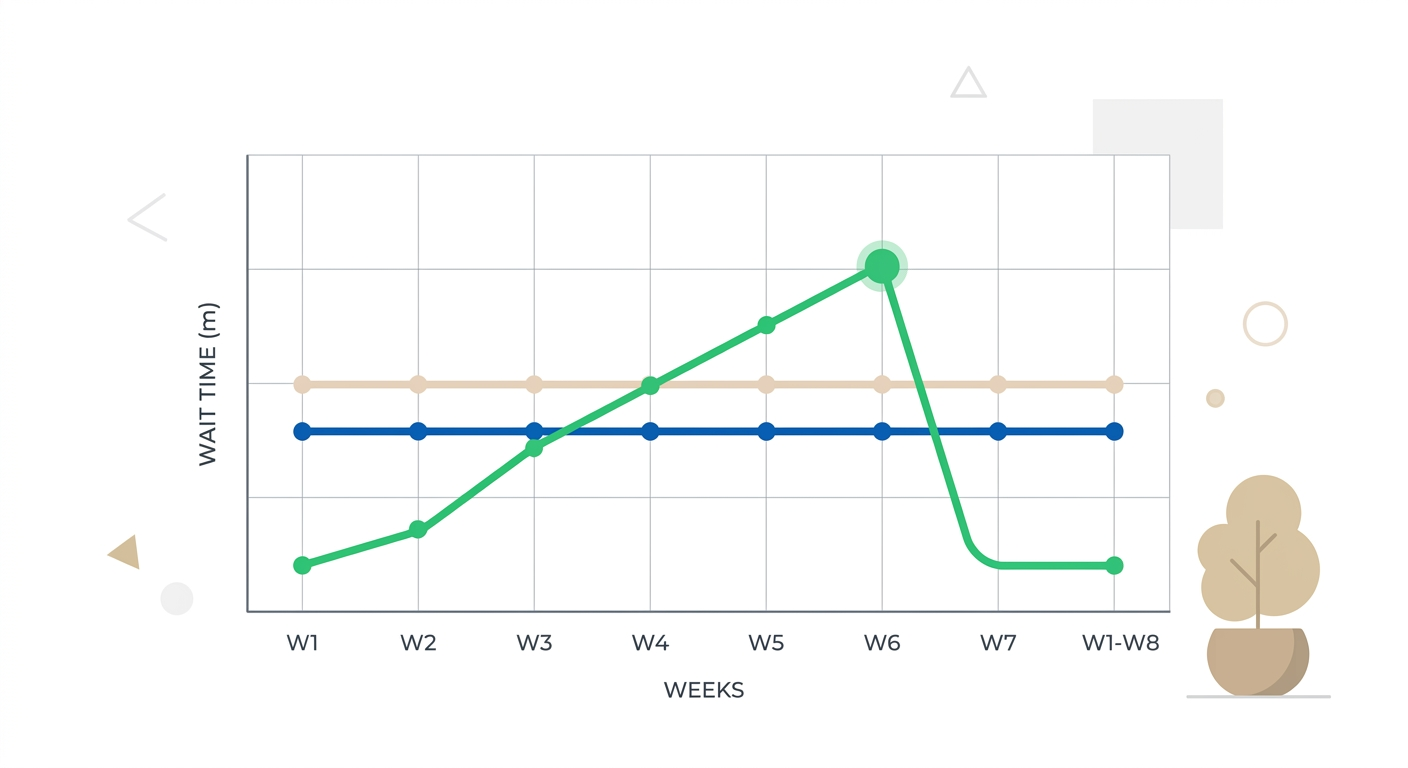
This is one of the most underappreciated benefits of operational analytics for branches: it makes underperformance visible at the pattern level, not the crisis level. When a branch’s average wait time climbs consistently over four consecutive weeks, that trend appears in the data before it appears in complaints. When no-show rates at a particular location run consistently higher than the network average, that signal is available for investigation now, not after a formal review months later.
The practical result is a shift from crisis management to pattern management: smaller, earlier interventions that prevent problems from reaching the customer at all.
Operational Analytics Reduces Costs When Capacity Matches Demand
Overstaffing and understaffing both cost money, but in different ways. Overstaffing is obvious: idle staff are a direct expense. Understaffing is less visible but equally damaging. Long queues drive no-shows. No-shows represent lost service revenue. Dissatisfied customers represent churn that does not appear in any operational report until it is too late to act on.
Branch analytics addresses both sides. Peak hour heatmaps show exactly when each branch is at capacity, which hours are consistently underserved, and which carry excess staffing relative to actual demand. This makes the case for scheduling adjustments that would otherwise be based on manager preference and habit rather than evidence.
Organizations that align staffing schedules to analytics-confirmed demand patterns consistently report 25% reductions in operational costs, because they stop maintaining excess capacity in the wrong hours while failing to cover the hours that actually need it.
Performance Accountability Becomes Data-Backed
One of the most consequential benefits of operational analytics for branches is the shift it creates in performance conversations. When a regional manager is asked why a branch is underperforming, the answer is either a data-backed explanation or a narrative. Analytics determines which one it is.
With structured performance data, accountability works in both directions. Managers can explain underperformance with evidence rather than instinct, and they can demonstrate improvement with the same evidence. “Wait times at branch 7 increased 18% in March due to two staff absences during peak hours and have returned to baseline following schedule adjustments” is a fundamentally different answer than “things were difficult but we handled it.”
This matters particularly in organizations with multiple management layers, procurement accountability, or external reporting requirements. Operational analytics researchers consistently identify accountability and defensible decision-making as among the most durable organizational benefits of moving to data-backed operations management. Data-backed performance documentation is not just useful internally. It is defensible to anyone who asks.

Reporting Happens Automatically, Without Manual Effort
In most multi-branch operations without analytics, reporting is a manual chain. Branch managers compile their numbers. Regional managers aggregate them. Something gets missed, something gets rounded, and by the time the report reaches the person who needs it, it is already several days old and based on figures that no one has verified.
Automated branch analytics reporting removes this chain entirely. Scheduled reports deliver themselves daily, weekly, or monthly to the right inboxes without anyone having to compile, format, or follow up. The data is consistent, comparable across branches, and current.
The benefit is not just time saved. It is reliability. Automated reports do not forget a branch. They do not round figures. And they arrive whether or not the branch manager remembered to send their numbers on Friday afternoon.
Branch-to-Branch Comparisons Drive Consistent Standards
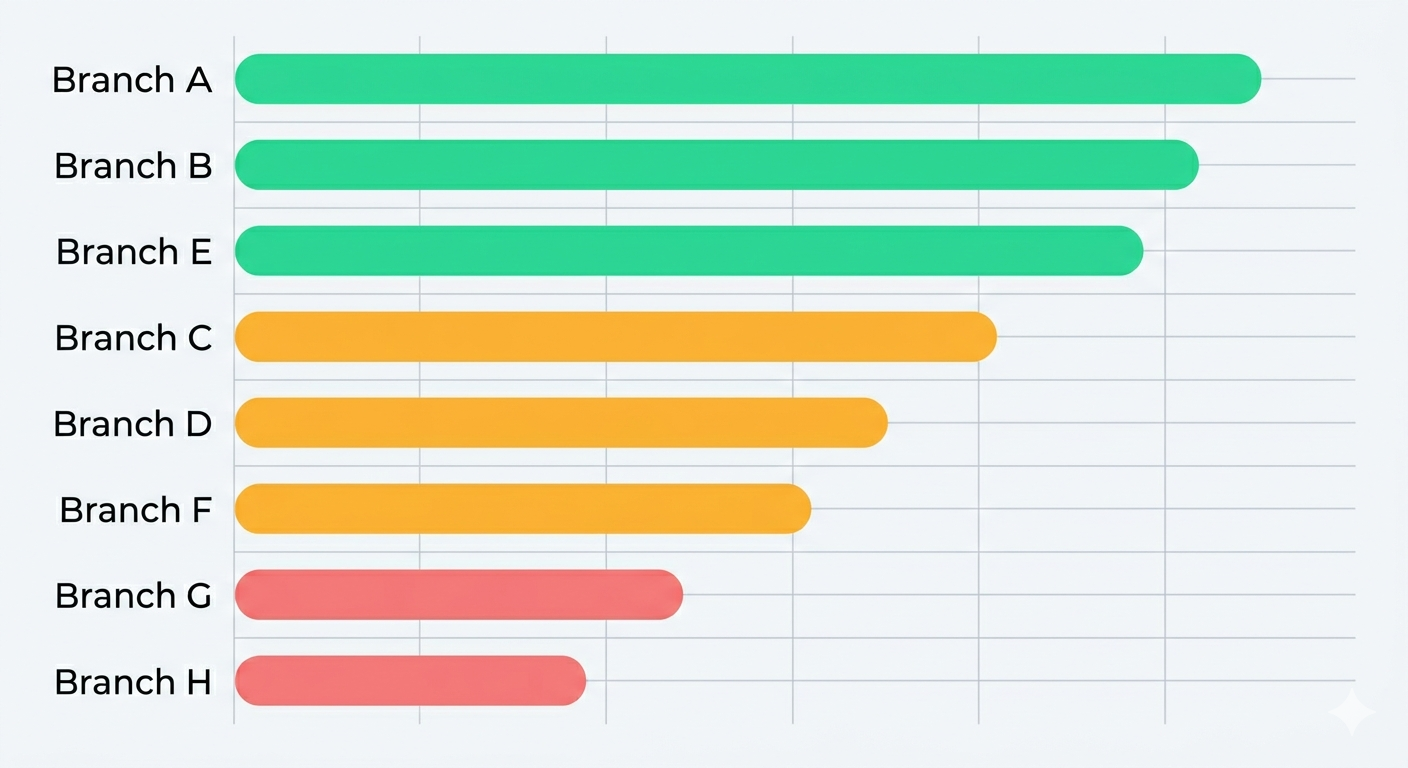
When each branch is managed in isolation, performance differences between locations are difficult to detect and harder to act on. One branch serves 40 customers per hour with three counters. Another serves 28 with the same staffing. The gap exists, but no one is looking at both locations at the same time.
Branch analytics surfaces these comparisons automatically. Network-wide performance benchmarks become visible, which makes it possible to identify branches that consistently perform above average, understand what they are doing differently, and apply those practices elsewhere. It also makes it harder for persistent underperformance to go unnoticed behind locally acceptable explanations.
This is how consistent service standards are built across a large operation: not through policy documents alone, but through data that shows which branches are meeting the standard, which are not, and by how much.
Key Takeaways: Benefits of Operational Analytics for Branches
- When staffing matches actual demand patterns, wait times drop and staff efficiency improves by up to 35%.
- Branch analytics surfaces underperformance at the pattern level, enabling earlier interventions before problems reach customers.
- Aligning capacity to confirmed demand reduces operational costs by up to 25%, by eliminating excess staffing in the wrong hours.
- Performance accountability shifts from narrative to evidence, which matters at every layer of the organization including external reporting.
- Automated reporting removes the manual aggregation chain and delivers consistent, current data without human follow-up.
- Branch-to-branch comparisons make performance gaps visible across the entire network, which is the foundation for consistent service standards.
Waqtak is a cloud-based queue management system built for multi-branch service organizations.
The Decisions You’re Making Without the Data to Back Them
Last quarter, you made three operational decisions. You moved a staff member from Branch 6 to Branch 3…

How to Choose an Analytics Platform for Your Multi-Branched Operation
The question is not whether your branches produce data. They do, every hour they are open. The question…

What is Operational Analytics for Multi-Branched Operations
If you manage multiple branches, you are making decisions every day without complete information. You know what last…
Want to see how this works in practice?
Book a personalized demo and we will walk you through how Waqtak closes these blind spots for an operation like yours.
Book a Demo