Most branches already collect some form of customer feedback. A comment box at the exit. A link in a service receipt. An occasional satisfaction survey. The problem is rarely collection. It is what happens after. Without a customer feedback management system, responses arrive as scattered data points that nobody aggregates, analyzes, or acts on consistently.
A customer feedback management system is the structured process of collecting, organizing, and acting on customer input across all service interactions. The five benefits below reflect what branch operations gain when feedback moves from informal and occasional to structured and continuous. If you are still building context on what these systems are and how they work, start with What is Customer Feedback Management before continuing here.
Most customers who had a bad experience at your branch did not tell you. They told someone else.
The 5 Benefits at a Glance
- Problems surface before they become patterns
- The silent majority stops being invisible
- Branch performance becomes comparable across locations
- Staff accountability improves without micromanagement
- Customer retention becomes manageable, not reactive
Problems Surface Before They Become Patterns
A customer feedback management system surfaces service problems in near real time, before they become patterns, by automatically collecting and analyzing customer responses across all branches and channels. A branch that waits for formal complaints to identify service problems always operates behind the curve. By the time a complaint reaches management, the problem has usually affected multiple customers and settled into the branch’s daily routine.
Real-time alerts notify branch managers when satisfaction scores fall below a defined threshold within minutes of the interaction, not days later in a report. A recurring complaint type appearing across multiple visits on the same day becomes visible before that day ends.
The operational value is in the response window. A service problem identified at 10am is recoverable before the afternoon rush. The same problem identified in a weekly report is a pattern that has been running unchecked for days. A CFM system compresses the gap between when a problem starts and when management becomes aware of it.
For regional managers, the benefit extends further. When multiple branches show declining scores in the same period, the system surfaces a potential systemic issue before it develops into a regional trend. That visibility is impossible to achieve through informal channels regardless of how attentive the management team is.

The Silent Majority Stops Being Invisible
Most dissatisfied customers never complain directly to the branch. A customer feedback management system reaches them through low-friction channels like SMS surveys and exit kiosks, capturing feedback that would otherwise never reach management. They reduce their engagement, switch providers quietly, or share their experience informally with others. The branch has no record that anything went wrong.
A kiosk prompt at the branch exit, an SMS survey delivered within minutes of the visit, a QR code on the service receipt — these channels reach customers who would not stop to complain formally but will respond to a low-friction prompt. Their ratings and comments enter the system alongside responses from customers who had a positive experience.
The result is a data set that reflects the actual distribution of customer sentiment rather than only the extremes. Branch managers stop making decisions based on the loudest voices — the complaints and the compliments — and start making them based on a representative picture of the full customer base.
This matters most for service issues that customers consider minor enough not to raise formally but significant enough to affect their likelihood of returning. Those issues are precisely the ones that a CFM system surfaces and informal channels miss entirely.
Branch Performance Becomes Comparable Across Locations
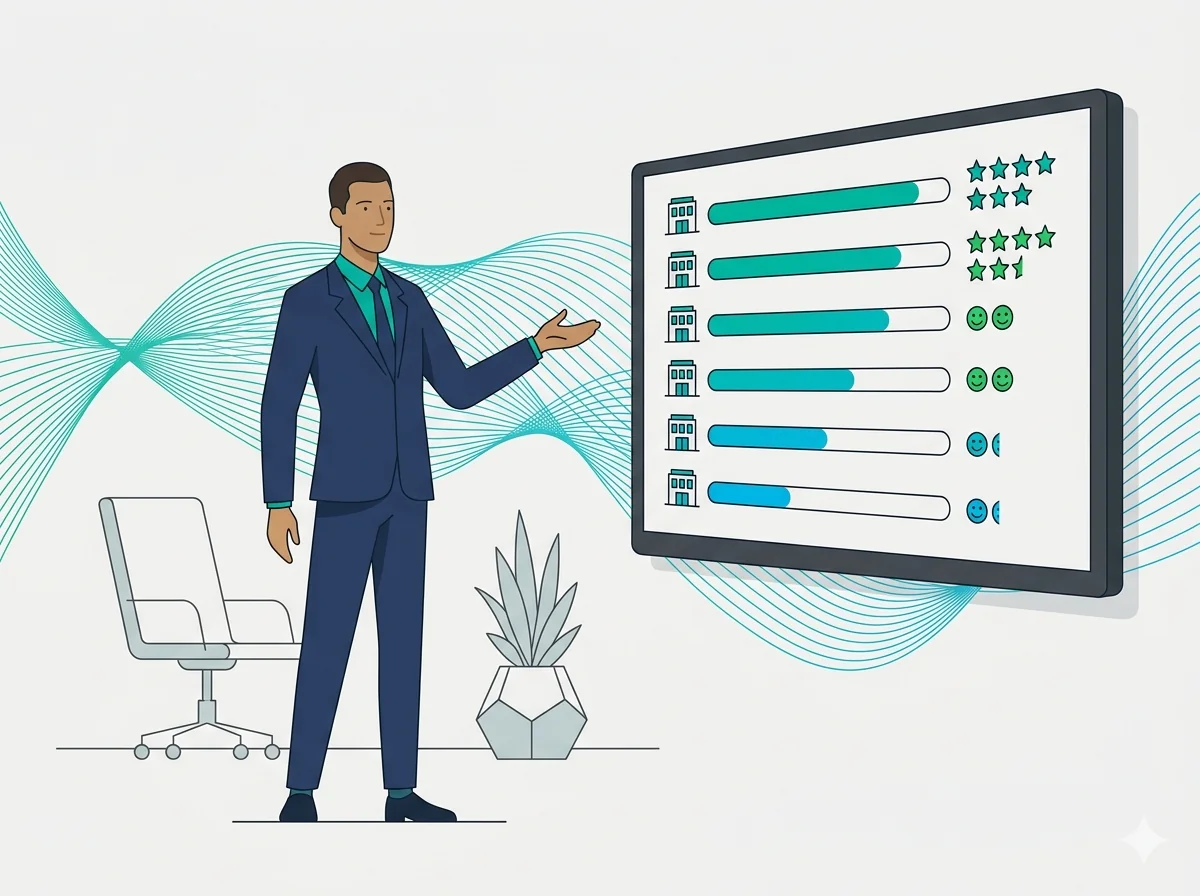
By applying the same feedback metric across every location, a customer feedback management system lets regional managers rank branches by satisfaction score, identify underperformers, and investigate what drives the gap. Without structured feedback data, comparing branch performance requires proxy measures: queue times, transaction volumes, staff attendance. These metrics describe operational efficiency. They say less about how customers actually experience the service.
Every branch collects responses through the same channels, measures the same satisfaction dimensions, and feeds data into the same dashboard. A regional manager can rank all fifteen branches by customer satisfaction score, identify the top and bottom performers, and examine what separates them.
Branch A and Branch B may have similar transaction volumes and similar queue times, but if Branch A’s satisfaction scores consistently run ten points lower, that gap points to something in the service interaction itself. Without structured feedback data, that gap stays invisible. With it, the regional manager has a specific, measurable signal to investigate rather than a general impression that something is off.
Over time, the data also reveals which interventions work. A branch that introduces a new staff onboarding process and sees satisfaction scores improve the following month generates evidence that other locations can act on.
Staff Accountability Improves Without Micromanagement
When satisfaction data is tied to specific service interactions, staff accountability shifts from direct observation to measurable outcomes — managers coach from data points rather than subjective impressions. A manager cannot observe every counter interaction across every shift. What the manager can do is review satisfaction data associated with specific service times, service types, and staff members when the system supports that level of granularity.
When staff know that customer ratings follow each service interaction, the data reinforces the standard of service rather than direct observation alone. Feedback becomes part of the operational environment rather than a periodic event that arrives during a performance review.
This shifts the manager’s role from observer to analyst. Instead of patrolling the floor to identify poor service delivery, the manager reviews the data to identify where satisfaction drops and investigates from there. Staff coaching conversations shift from subjective impressions to specific data points, which makes those conversations more productive for both parties.
The accountability effect works in both directions. Staff who consistently receive high ratings have that performance visible in the data. Recognition based on customer feedback scores carries more weight than recognition based on a manager’s impression because it comes directly from the customers they served.
Customer Retention Becomes Manageable, Not Reactive
A customer feedback management system makes at-risk customers visible before they act, moving the intervention point to where recovery is still possible. Customer retention is significantly cheaper than customer acquisition. In branch service environments, the relationship between customer experience and retention is direct: a customer who has three unsatisfactory visits in a row is more likely to reduce their engagement than a customer whose issues are identified and addressed early.
A customer who rates their experience below a defined threshold triggers an alert. That alert creates an opportunity to investigate and, in some cases, recover the relationship before the customer makes a decision to leave.
At the aggregate level, satisfaction trend data predicts retention risk across the customer base. A branch whose average satisfaction score declines steadily over three months is accumulating retention risk that will not appear in transaction data until customers actually reduce their activity. According to McKinsey, organizations that act on customer feedback data consistently outperform those that collect it without closing the loop. The system moves the intervention point to where it can still make a difference.
Frequently Asked Questions
What is the main benefit of a customer feedback management system for branch operations?
The main benefit is early problem detection. A CFM system surfaces service issues in near real time by automatically collecting and analyzing customer responses across all branches and channels. This compresses the gap between when a problem starts and when management becomes aware of it — creating a window to act before it becomes a pattern.
What is the difference between customer feedback management and complaint management?
Complaint management handles customers who chose to raise a specific issue. Customer feedback management captures the full range of customer experience — including the majority of dissatisfied customers who said nothing and left quietly. A CFM system does not wait for customers to come forward. It asks every customer, through every channel, after every interaction.
How does a customer feedback management system reduce silent churn?
By reaching customers through low-friction channels like SMS surveys, exit kiosks, and QR codes immediately after their visit. Most dissatisfied customers do not complain formally — they simply stop returning. A CFM system captures their feedback before they make that decision, giving management a chance to identify and address the issue.
Can a CFM system compare performance across multiple branch locations?
Yes. By applying the same satisfaction metric across every location and feeding all responses into a single dashboard, a CFM system lets regional managers rank branches by satisfaction score, identify the lowest performers, and investigate what is driving the gap. This is the comparison layer that individual branch observation cannot produce.
How does customer feedback management improve staff accountability?
When satisfaction data is tied to specific service interactions, managers can review performance by service type, time of day, and staff member rather than relying on floor observation alone. Staff know that customer ratings follow each interaction. Coaching conversations shift from subjective impressions to specific, measurable data points.
Key Takeaways: Benefits of Customer Feedback Management Systems
- A customer feedback management system compresses the gap between when a service problem starts and when management becomes aware of it, creating a window to act before the problem becomes a pattern.
- The majority of dissatisfied customers never complain formally. A CFM system captures them through low-friction channels that informal methods miss entirely.
- A common feedback metric across all branches makes performance comparison possible and gives regional managers a specific signal to investigate rather than relying on proxy measures.
- Data-driven accountability improves staff performance without increasing direct observation. Feedback becomes part of the operational environment, not a periodic review event.
- Retention risk becomes visible in satisfaction trend data weeks before it appears in transaction data, creating an intervention window that reactive approaches cannot produce.
The main benefit is early problem detection. A CFM system surfaces service issues in near real time by automatically collecting and analyzing customer responses across all branches and channels. This compresses the gap between when a problem starts and when management becomes aware of it — creating a window to act before it becomes a pattern.
Complaint management handles customers who chose to raise a specific issue. Customer feedback management captures the full range of customer experience — including the majority of dissatisfied customers who said nothing and left quietly. A CFM system does not wait for customers to come forward. It asks every customer, through every channel, after every interaction.
By reaching customers through low-friction channels like SMS surveys, exit kiosks, and QR codes immediately after their visit. Most dissatisfied customers do not complain formally — they simply stop returning. A CFM system captures their feedback before they make that decision, giving management a chance to identify and address the issue.
Yes. By applying the same satisfaction metric across every location and feeding all responses into a single dashboard, a CFM system lets regional managers rank branches by satisfaction score, identify the lowest performers, and investigate what is driving the gap. This is the comparison layer that individual branch observation cannot produce.
When satisfaction data is tied to specific service interactions, managers can review performance by service type, time of day, and staff member rather than relying on floor observation alone. Staff know that customer ratings follow each interaction. Coaching conversations shift from subjective impressions to specific, measurable data points.
Waqtak is a cloud-based queue management system built for multi-branch service organizations.

How to Choose a Customer Feedback Solution
The market for customer feedback tools is crowded. Survey platforms, NPS tools, exit kiosk vendors, CRM-integrated feedback modules…
What is Customer Feedback Management?
Customer feedback is not scarce. Every customer who visits a branch forms an opinion: the wait, the staff,…
Want to see how this works in practice?
Book a personalized demo and we will walk you through how Waqtak closes these blind spots for an operation like yours.
Book a Demo