Last quarter, you made three operational decisions. You moved a staff member from Branch 6 to Branch 3 because Branch 3 appeared to be struggling. You adjusted opening hours at Branch 9 because early mornings seemed too quiet. You authorized an extra service counter at Branch 2 because the manager said weekends were unmanageable.
This week, someone asks how those changes performed. You think Branch 3 is better, but you could not say by how much. You believe wait times at Branch 2 have improved on weekends, but the last number you saw was from a manager’s verbal update. You have a general sense that things are moving in the right direction. What you do not have is the data to confirm any of it.
This is the operating reality for most multi-branch organizations. Decisions are made continuously, by people who are experienced, attentive, and genuinely trying to run good operations. And almost none of those decisions have a measurable outcome attached to them. A structural blind spot exists between what your operation produces and what gets retained as evidence: your branches generate performance data every day, and without an operational analytics layer, it disappears the moment the day ends.
“Experience tells you what you’ve seen. Data tells you what you haven’t.”

Can You Answer These?
Consider your last three months of operations and try answering these questions:
- Was your average wait time at Branch 4 higher or lower six months ago?
- Did the staffing change you made in the spring actually reduce wait times?
- Which service type has been driving your longest queues, and is it getting better or worse over time?
- If leadership asks what impact your operational changes had this year, what do you show them?
- Which of your branches has been consistently underperforming for the past quarter?
If you cannot answer most of these, the problem is not that the data does not exist. It does. Every customer interaction at every branch generates a record of wait time, service duration, service type, counter assignment, and outcome. The problem is that without a system to aggregate and retain it over time, that data evaporates. You have today’s snapshot. You do not have the pattern behind it.
What Happens Without Operational Analytics
When decisions move forward without historical data, four things happen. They happen slowly enough that each one feels manageable on its own.
1. Improvements exist but cannot be proven
You made a change. Something shifted. The branch manager says it feels better. But without before-and-after data, you cannot determine whether the improvement came from your change, from a seasonal drop in demand, from a particular staff member who happened to be performing well that month, or from something else entirely.
The practical consequence is not just that you cannot report the improvement to leadership. It is that you cannot replicate it. If you do not know what caused a result, you cannot deliberately produce it at another branch.
2. The same problems keep returning
Without pattern detection, operational bottlenecks return on schedule. Every Tuesday morning, the queue at Branch 7 spikes and several customers leave without being served. It has happened consistently for months. The branch manager mentions it occasionally. But without data that connects those incidents across weeks and months, the pattern stays invisible, and the cause stays unaddressed.
Pattern blindness is one of the most persistent blind spots in branch operations, precisely because individual daily snapshots look like isolated events. The pattern only becomes visible when data accumulates over time and gets displayed as a trend.
3. Budget requests require justification you do not have
You need to hire two additional staff members for your highest-volume branches. You believe the investment is justified. But “we need more staff” does not pass a procurement committee. “Average wait times at our top three branches exceed target by 35% between 10am and 1pm, with a documented correlation to a 9% walk-out rate” does pass a procurement committee.
Data is not just operational. It is political. In any organization where resource decisions go through review layers, the person requesting budget needs evidence, not intuition. Without historical data, every request is a narrative.
4. You cannot demonstrate performance when it counts
You are responsible for service quality across every branch in your network. When performance is questioned, you are expected to have a specific answer. Without historical analytics, the best answer available is “I believe things are generally on track.” That is not an answer that builds confidence in leadership. It is an answer that invites deeper scrutiny.
In organizations where performance is reviewed by committees or tied to institutional targets, this gap in historical data creates a blind spot that gets more expensive with every decision made without evidence behind it.

The Data Your Operation Is Already Generating
Your branches produce operational data every hour. The question is not whether the data exists. It is whether you have a layer that retains it, aggregates it across locations, and makes it readable over time.
| Data Point | Without Analytics | With Analytics |
|---|---|---|
| Wait time | Today’s number only | Trend over 30, 60, 90 days by branch |
| Staffing decisions | Gut feeling and habit | Peak hours mapped to actual demand patterns |
| Branch comparison | Manager anecdote | Ranked performance table, any time period |
| Improvement verification | None — impression only | Before/after measurement for every change |
| Budget justification | Narrative and intuition | Data-backed case with trend evidence |
The difference between organizations with and without operational analytics is not the volume of data being generated. It is whether a system exists to aggregate it across branches and retain it over time. Queue management creates the events. Analytics turns them into pattern, trend, and evidence.

What Would You Do Differently With This Data?
This is not a rhetorical question. Consider the decisions you made in the last quarter and ask yourself:
If you could see whether wait times are trending up or down over 90 days, would you manage your branches the same way? Organizations that begin tracking wait time trends for the first time often discover that branches they assumed were performing well have been drifting gradually for months. What felt stable was in slow decline. Trend data surfaces problems that daily reports cannot see.
If you could measure the outcome of every staffing change, how would your decision-making process change? Most operational decisions are made without a feedback loop. You make a change, you wait, you form an impression. With analytics, the impression is replaced by measurement. Average wait time at Branch 4 dropped from 18 to 11 minutes in the two weeks following the spring staffing adjustment. That is not an interpretation. That is something you can act on, replicate, and report upward.
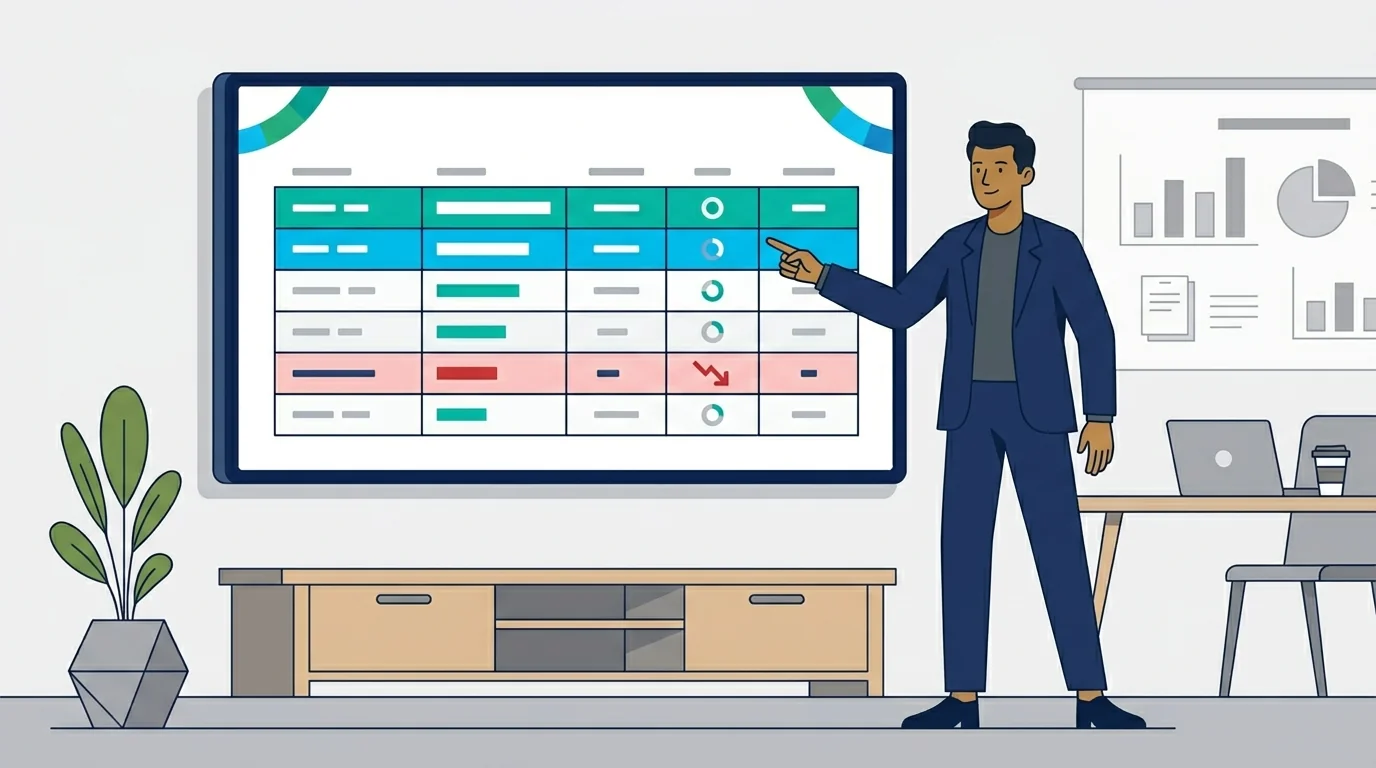
If you could rank your branches by performance and show the trend, what would that change about the conversations you have with leadership? Instead of answering “how are we performing across branches?” with a description, you bring a table: top three branches, bottom three, improvement trends over the quarter. Every claim has a number behind it. The conversation shifts from reporting to reviewing.
Why Most Organizations Do Not Have This Yet
If the data is this valuable, why is it not being used everywhere?
1. “We have end-of-day reports.”
Snapshots are not trends. An end-of-day report tells you what happened today. It does not tell you whether today was better or worse than the same day last month, which direction you are heading, or what pattern is forming below the surface. Reports give you operational awareness. Analytics gives you institutional memory.
2. “We trust our managers to know their branches.”
Good branch managers do know their branches. But their knowledge is local and present-tense: what they have personally observed at their location, not how their branch compares to others across the network. When you need to report upward, manager knowledge is not a substitute for quantified trend data. Good management and good data are not alternatives. They reinforce each other.
3. “Building analytics is a large project.”
Building custom analytics infrastructure is a large project. Using an operational analytics layer already integrated into your queue management platform is not. If your QM system captures floor events, an integrated analytics module reads that same data and organizes it by branch, service type, time period, and metric. The configuration is minimal. The output is continuous. No separate data pipeline, no dedicated analyst required.

The Shift: From Impressions to Evidence
The difference between a branch operation with no analytics and one with historical data is not primarily a technology change. It is a change in what counts as an acceptable answer.
Organizations that implement operational analytics consistently report reductions in average wait times and more efficient staff allocation. Not because the system solves problems on its own, but because it closes the blind spot between what is happening and what is known. Once you can see a pattern clearly, you can act on it. Once you measure the action, you can replicate it and prove it worked.
Where to Start with Operational Analytics
You do not need a full analytics rollout across every branch to begin capturing decision-grade data. The typical progression:
-
1Pick one branch and one metric. Average wait time is the most common starting point. Run it for 30 days without making changes. You need a baseline before you can measure anything.
-
2Identify the pattern in that data. When is the peak? How consistent is it week to week? Are there outlier days, and what happened on those days? The pattern, not the daily number, is the insight.
-
3Make one deliberate change. Shift a staff member. Open an additional counter during the peak window. The change should be specific and documented: you are setting up a before-and-after measurement, not adjusting by feel.
-
4Measure the result. Did average wait time drop? By how much? Over how many days? The answer gives you something you did not have before: a repeatable, documented operational experiment you can present to anyone who asks.
-
5Expand to the network. Once you have validated the approach at one branch, roll the same metrics across your other locations. Branch comparisons become possible. Network-wide performance trends become visible. The data model is the same whether you are running 5 branches or 50.
In a Nutshell
Without operational analytics, your branches lose the same things every day, across every location, whether you notice it or not:
- Decisions cannot be verified. You make operational changes and move forward on impression. Without before-and-after data, you cannot prove a change worked, replicate it, or learn from it.
- Patterns repeat undetected. The same bottleneck appears every Tuesday. Without trend data, it looks like a series of isolated incidents rather than a recurring problem with a traceable cause.
- Budget requests lack evidence. “We need more staff” is a narrative. “Peak-hour demand exceeds capacity at three branches with a documented impact on walk-out rate” is a case. Without data, you cannot build the case.
- Branch comparison is impossible. Without consistent metrics retained over time, you cannot tell which branches are improving, which are declining, or what separates the top performers from the bottom.
- Accountability has no foundation. When leadership asks about service quality trends, the honest answer is “I believe things are generally fine.” That answer has a shelf life.
- The data already exists, but it evaporates. Every interaction at every branch generates wait time, service duration, counter assignment, and outcome data. Without an operational analytics layer, it disappears at the end of each day.
The missing rearview mirror is not a technology problem. It is a retention problem. Your floor is already generating the data. The question is whether anything is capturing it long enough to become a pattern.
Frequently Asked Questions
What is the difference between real-time monitoring and operational analytics?
Real-time monitoring shows you what is happening right now: current queue lengths, wait times at each branch, active counters. Analytics shows you what has happened over time: trends, patterns, comparisons across periods and locations. Monitoring is situational awareness. Analytics is institutional memory. Both draw from the same underlying data, but they answer different questions.
How much data do I need before analytics becomes useful?
Thirty days of consistent data at one branch is enough to identify peak patterns, compare service types, and set a baseline for measuring changes. Ninety days gives you enough to detect trends rather than noise. The longer you collect, the richer the comparisons become, but you do not need months of history before you start drawing actionable conclusions.
Can analytics tell me why performance changed, or only that it changed?
Analytics tells you what changed, when it changed, and which variables correlate with the change. If wait times at Branch 4 spiked on March 14th, analytics can show you that service volume was normal but average service time doubled, and that the spike was concentrated at one counter. The human interpretation of why that happened remains yours. Analytics gives you the evidence to reason from, not the conclusion.
Does my team need data skills to use operational analytics?
Not for the kind of analytics this article describes. Operational branch analytics is designed for operations managers and directors, not data analysts. The outputs are dashboards, ranking tables, trend charts, and wait time averages by time period. You need to know what questions to ask. The system handles the rest.
How does an analytics system connect to our other reporting tools?
Most operational analytics platforms export data via API or standard file formats (CSV, Excel), and many connect directly to BI tools like Power BI, Tableau, or Google Looker Studio. The relevant question to ask vendors: does analytics data flow automatically into your existing reporting environment, or does it require a manual export step? The answer determines whether the system integrates or sits alongside what you already use.
How long before we see measurable impact from operational analytics?
Most organizations see actionable patterns within the first 30 days. The first measurable improvement typically follows the first data-driven change, which can happen within 60 days of deployment. The compounding value builds over time: as you accumulate more history, seasonal patterns become visible, branch comparisons become more reliable, and your ability to justify operational requests becomes significantly stronger.
Waqtak is a cloud-based queue management system built for multi-branch service organizations.

How to Choose an Analytics Platform for Your Multi-Branched Operation
The question is not whether your branches produce data. They do, every hour they are open. The question…

The Benefits of Operational Analytics for Multi-Branched Companies
The benefits of operational analytics for branches show up most clearly in the decisions it changes, not the…

What is Operational Analytics for Multi-Branched Operations
If you manage multiple branches, you are making decisions every day without complete information. You know what last…
Want to see how this works in practice?
Book a personalized demo and we will walk you through how Waqtak closes these blind spots for an operation like yours.
Book a Demo