At 10:30 in the morning, the waiting area is standing room only. Numbers have been called, customers are restless, and the service counters are running at full capacity. Staff are moving fast. Somewhere in that room, a customer who drove 30 minutes and has been waiting 40 is deciding whether to stay or leave.
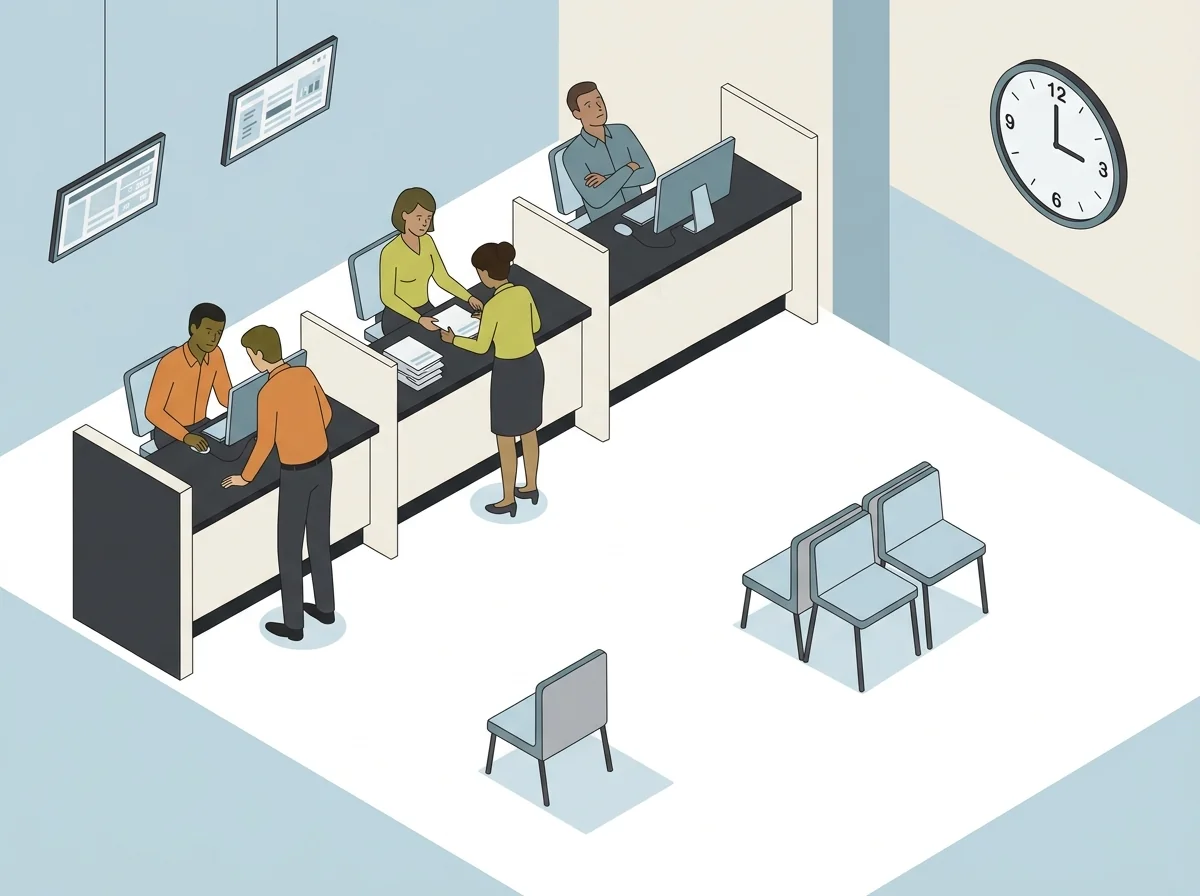
At 3:00 in the afternoon, the same branch is quiet. Two customers. Six staff. Everyone is technically available. Nothing is happening. This is the structural cost of running walk-in operations without appointment scheduling.
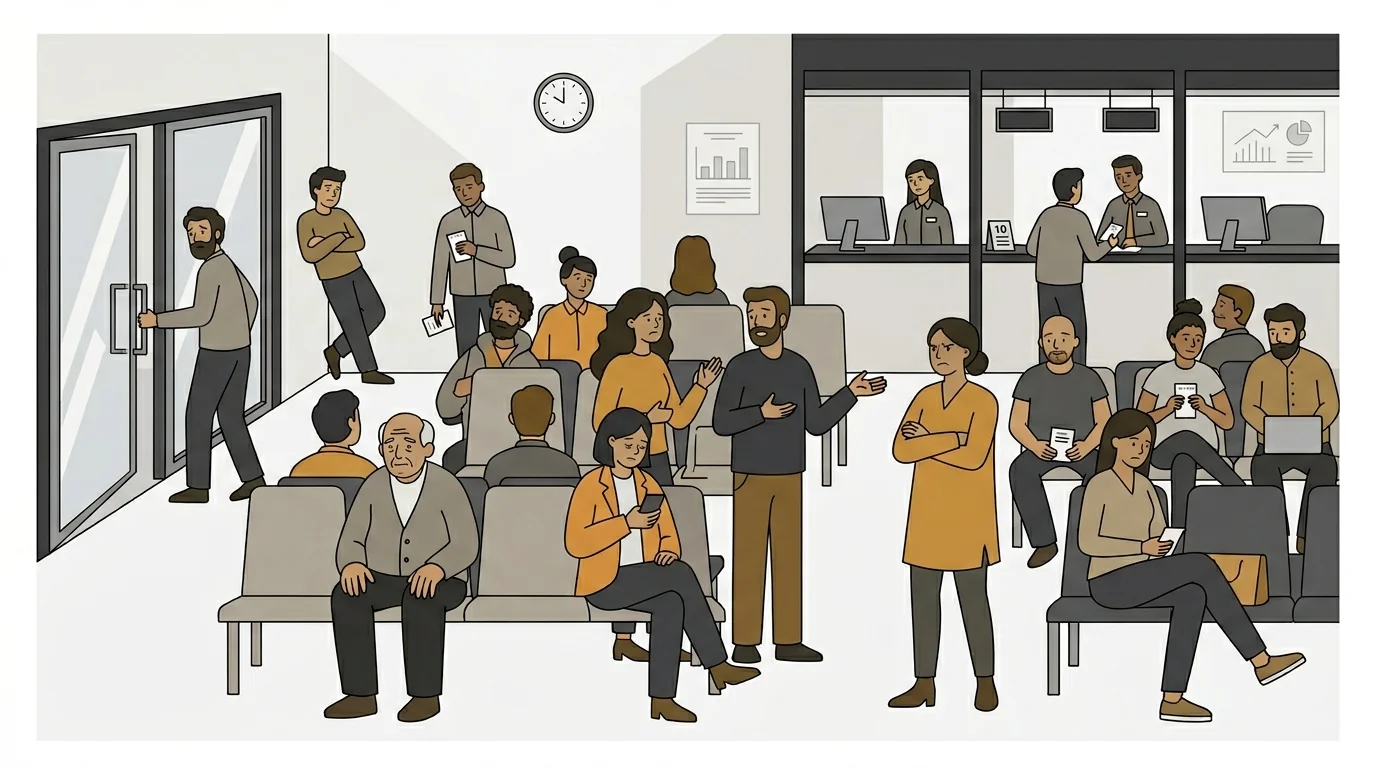
The branch is open for eight hours. Two of them are genuinely busy. The rest are not. And both states cost the same amount in staff wages, utilities, and overhead.
This is not a staffing problem. It is a demand distribution problem. And the reason it persists is partly structural (walk-in operations have no mechanism to shape when customers arrive) and partly attitudinal: a quiet afternoon has never appeared on anyone’s complaint form.
“The cost of peak congestion is visible: customers complain, managers notice, reports capture it. The cost of an idle branch gets filed under ‘that’s just how it works.'”
Before You Continue: A Few Questions
These are not rhetorical. If you can answer them, the rest of this article may not apply to you.
- ?What percentage of your daily visitors arrive in the first three hours of operation?
- ?How many staff members are idle between 2pm and closing time?
- ?What is your peak-hour wait time compared to your quietest hour?
- ?How much advance notice do your staff have before a rush begins?
- ?Could you tell a customer exactly when the best time to visit is, and would they come?
If those answers are not in front of you right now, then your operation is absorbing demand rather than managing it. That distinction matters more than it may seem.
What Walk-In Operations Actually Do
A walk-in model transfers all scheduling decisions to the customer. Customers decide when to come. The branch responds to whatever arrives. On paper, this feels like simplicity. In practice, it produces a demand curve that looks broadly the same across most walk-in service operations: heavy front-loading in the morning, a mid-day taper, and a long quiet tail in the afternoon.
The shape of that curve is not random. Customers who need to visit a service branch tend to cluster around the same behavioral windows: before work, during a lunch break, or shortly after opening. The afternoon attracts fewer because the day is already committed.
The result is structurally predictable. And yet most walk-in operations treat every peak as a surprise.
The problem is not that your branch gets busy. It is that busy and idle happen at the wrong times, and nothing in a walk-in model changes that pattern.
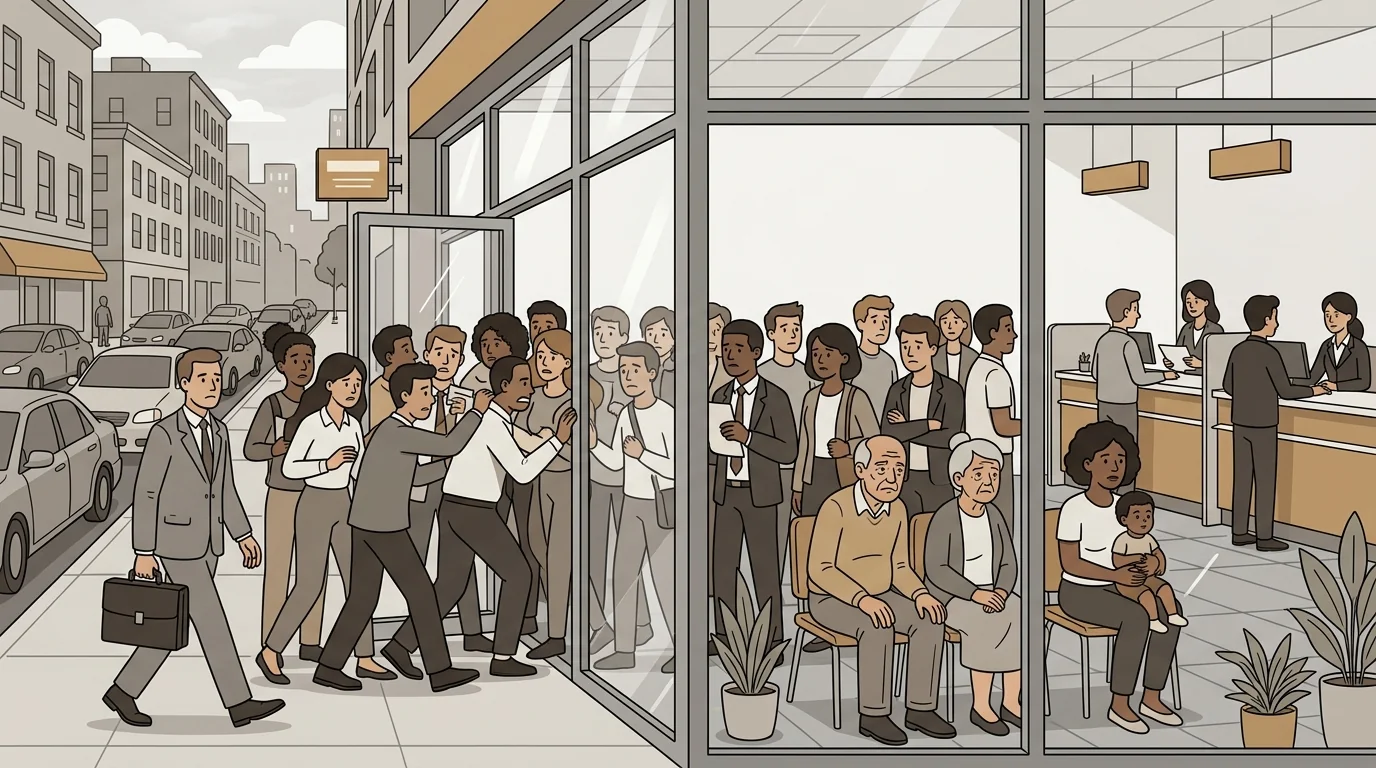
Consequence 1: Peak Congestion Is Visible and Expensive
When the morning rush hits, everything that can go wrong does. Wait times climb. Customers who have been standing for 25 minutes start asking questions. Some take a number and leave before they are called. Others do not come in at all when they see the crowd at the door.
This is the visible half of the lopsided day. It generates complaints. It shows up in reviews. It creates the impression that the branch is perpetually understaffed, even when the afternoon tells a completely different story.
The operational response is usually to add staff at peak hours. That helps. But it does not fix the underlying shape of demand. On a Tuesday with an extra person on counter, the peak is slightly less severe. On a Wednesday without them, it returns exactly as before.
Consequence 2: Off-Peak Idle Is Accepted as Normal, but It Costs the Same
The afternoon idle creates a different kind of blind spot. There are no complaints because there are no customers to complain. There is no visible problem because there is nothing happening. It does not appear on any report as a loss, because the absence of activity does not trigger any alert.
But the staff are there. The counters are open. The overhead is running. You are paying for eight hours of operational capacity and using two or three of them at anything close to full load.
The cost of idle capacity is real. It just does not have a line item.
Idle capacity is not free. It is already purchased. The question is whether it is being used.
Consequence 3: Staff Are Reactive, Not Prepared
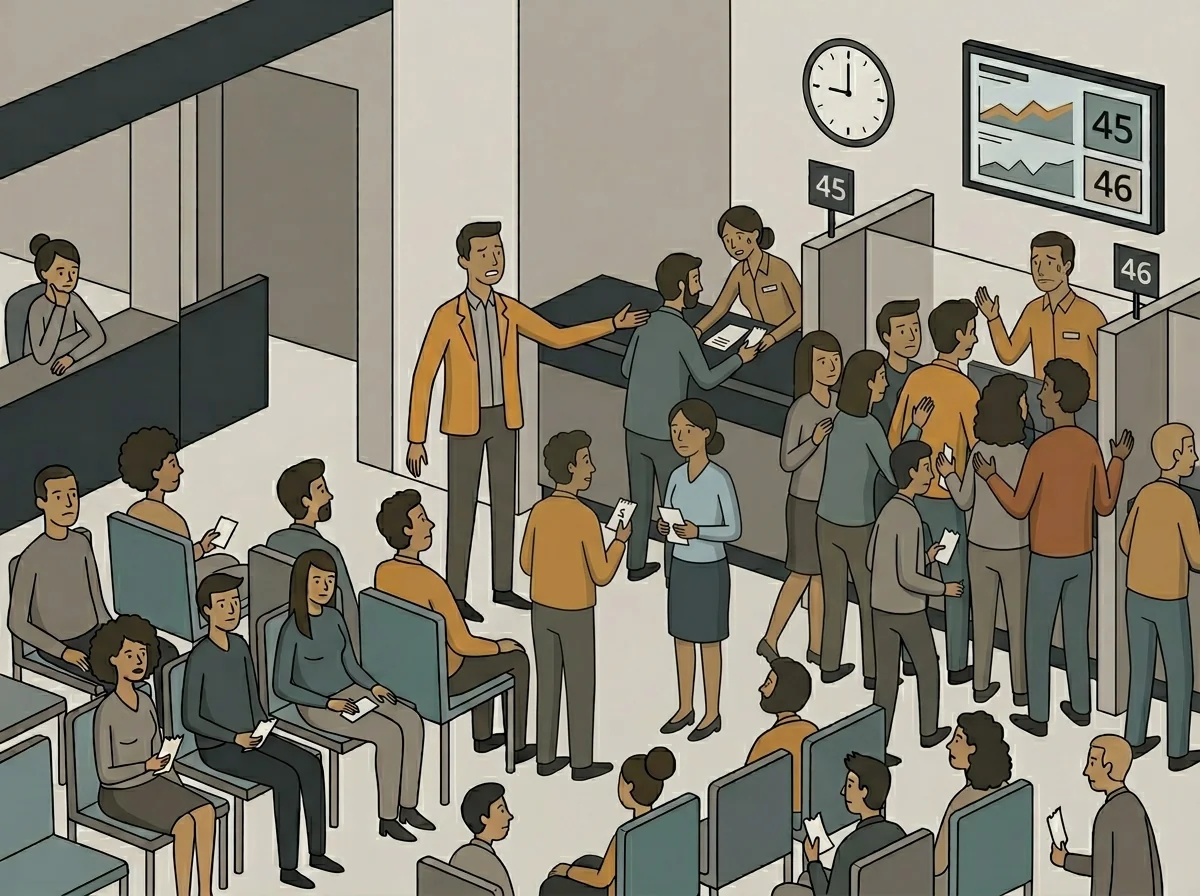
In a walk-in model, the morning rush is discovered when it arrives. The branch opens, and within the first thirty minutes, it is clear that today is going to be busy. Staff adjust in real time. Supervisors redirect. Counters that were going to open at 10am open at 9:15am instead.
This is reactive management. It works, after a fashion. But it means that every preparation decision (extra staffing, counter allocation, service routing) is made under pressure, after the demand has already shown up.
When tomorrow’s expected demand is visible today, those decisions can be made the evening before. Not reactively, but in advance. The difference in execution quality is significant.
Consequence 4: Walk-In Operations Absorb Demand — Appointment Scheduling Manages It
The core problem with a walk-in model is that the branch has no input into when customers arrive. The demand curve is set by customer behavior, not by operational design. The branch can respond to it well or respond to it badly. It cannot shape it.
Appointment scheduling changes that relationship. When customers can pre-book a slot, some proportion of the customers who would have arrived at 10am will book a 2pm slot instead, particularly if the 2pm slot is offered as available when the morning is shown as congested. The demand curve does not flatten by accident. It flattens because the system actively distributes it.
Most organizations implement appointment scheduling for walk-in operations because it improves the customer experience. That is a legitimate reason. But it undersells what the system actually does. The customer experience improves because the operational problem is solved. Distributed demand means shorter waits, less congestion, and a branch that can actually serve people at the time they arrive — particularly when appointment scheduling works alongside a queue management system to handle both the demand you shaped and the demand that still walks in. That is not a byproduct. It is the direct result of fixing how demand is managed.
What the Data Actually Shows
The table below reflects patterns that are consistent with how demand distributes in service-heavy sectors including banking, telecom, and government operations when appointment scheduling for walk-in operations is introduced.
| Operational Pattern | Walk-In Only | With Appointment Scheduling |
|---|---|---|
| Morning arrival concentration | 60–70% of daily volume before noon | Distributed across the day via pre-booked slots |
| Afternoon staff utilization | Low; capacity available, demand absent | Maintained through scheduled demand |
| Staff advance notice of demand | None; rush discovered when it arrives | Next day’s load visible in advance |
| Peak wait time | 30–45 minutes during morning rush | 8–12 minutes with distributed flow |
| Idle capacity cost | Invisible; no report captures it | Reduced by shifting bookings to low-demand windows |
The Objections Worth Addressing
Some do. Walk-in preference is real and should be preserved. The question is not whether to eliminate walk-ins. It is whether to give customers who would prefer a scheduled slot the option to take one. The customers most likely to book a 2pm appointment are the ones currently leaving during the morning rush. They are not choosing walk-in. They are giving up.
Appointment scheduling for walk-in operations does not require complex infrastructure. A basic digital booking system (accessible via a website link or QR code at the branch entrance) covers the core use case. The technology barrier is lower than it appears from the outside.
You have. And your afternoons have always been slow. That is not a coincidence. Walk-in models structurally produce the pattern you are currently managing. Operating the same way longer will not change the shape of the curve.
Before and After
40 customers arrive between 9 and 11am. 8 arrive between 2 and 4pm. Staff levels are the same throughout the day.
24 customers arrive 9 to 11am. 16 pre-book afternoon slots. Same total volume. Smaller peak. Afternoon capacity is used.
Staff find out it is a busy morning when the waiting area fills up. Reactive decisions made under pressure at 9:20am.
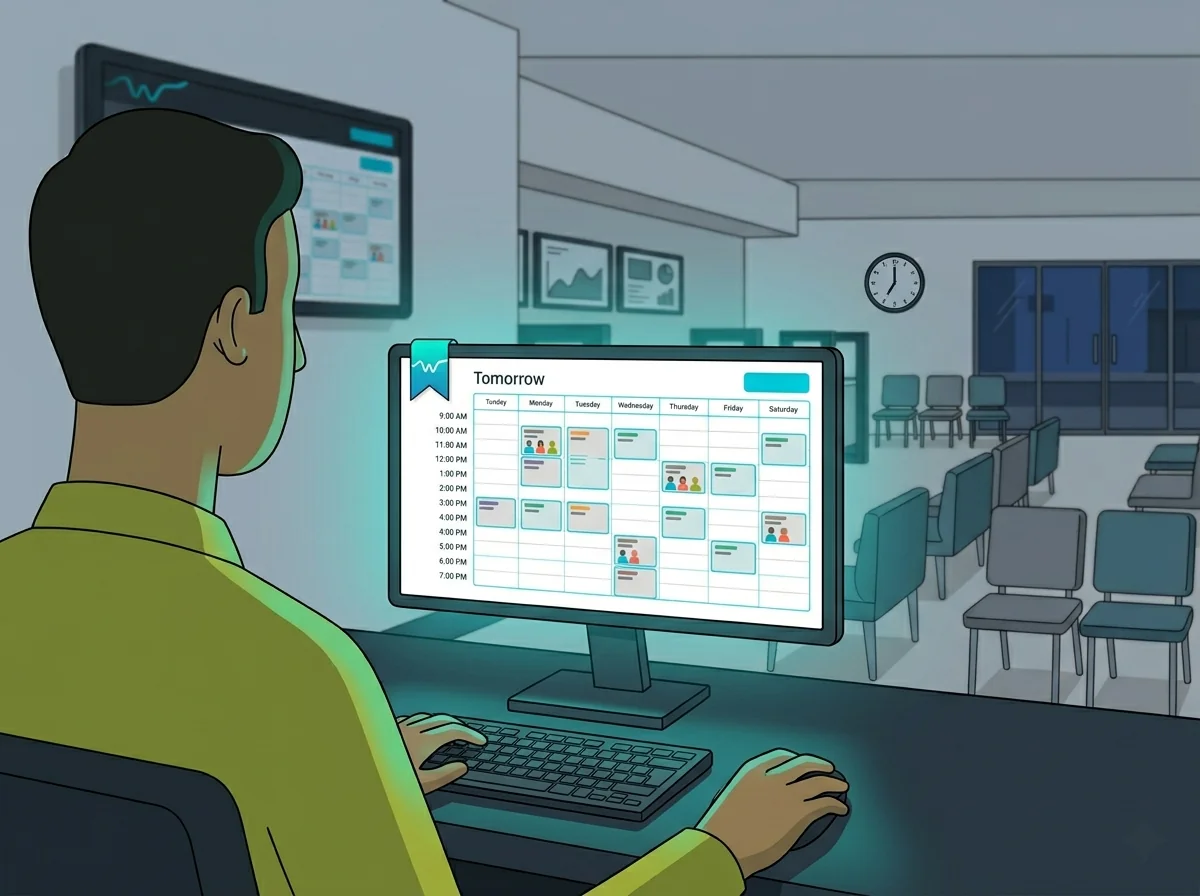
Tomorrow’s appointment load is visible this evening. Counter allocation, staffing, and service routing decided in advance.
Customer drives 30 minutes, arrives at 10am, waits 45 minutes. Leaves frustrated. Does not leave a review.
Customer books a 2pm slot, arrives on time, is served within 5 minutes. The experience is entirely different. Nothing about the branch changed except the timing.
Where to Start with Appointment Scheduling for Walk-In Operations
- 1Map your actual demand distribution. Pull arrival data by hour across a typical week. The lopsided pattern will be immediately visible. If you do not have this data, that is a separate problem worth solving first.
- 2Identify your idle window. Which hours have full staff capacity but low customer volume? That gap is the target. It represents recoverable capacity you are already paying for.
- 3Start with high-demand services. Introduce appointment slots for the services that drive the longest queues: document processing, consultations, account opening. Not every service type needs to be scheduled immediately.
- 4Make off-peak availability visible to customers. A booking option that no one knows about does not change behavior. Display available afternoon slots at the branch entrance, on your website, and wherever customers first encounter the decision to visit.
- 5Measure the shift over 30 to 60 days. Track whether morning arrival concentration is decreasing. Track whether afternoon utilization is increasing. The operational benefit is real but it takes time for booking behavior to establish itself.
The capacity is already purchased. The staff are already scheduled. The counters are already open. The question is whether the demand is shaped to match the supply, or whether the branch keeps absorbing whatever arrives, whenever it arrives.
In a Nutshell
- →Walk-in operations cannot shape when customers arrive. They can only respond to whatever shows up
- →The result is structurally predictable: a concentrated morning peak and a quiet afternoon, regardless of staffing levels
- →Peak congestion is visible and generates complaints; afternoon idle is invisible and generates nothing, but both cost the same
- →This lopsided pattern is one of the most consistent blind spots in multi-branch service operations, not because it is hidden, but because idle capacity has been accepted as a normal part of running a branch
- →Appointment scheduling for walk-in operations converts unmanaged demand into distributed demand. The volume does not change, the timing does
- →The customer experience improvement is real, but it follows from solving the operational problem. Fix how demand is managed and shorter waits, less congestion, and a better experience are the direct result
Waqtak is a cloud-based queue management system built for multi-branch service organizations.

Alawneh Exchange Partners With Waqtak to Take the Wait Out of the Branch Visit
Waqtak and Alawneh Exchange have partnered to bring digital queue and appointment services to Alawneh’s customers across the…
How to Choose an Appointment Scheduling System for Multiple Branches
Not every appointment scheduling system solves the same problem. A system built for a freelance consultant and a…

Benefits of Appointment Scheduling for Multi-branch Operations
Most branches run the same pattern every day. The first two hours after opening fill with customers. The…
Want to see how this works in practice?
Book a personalized demo and we will walk you through how Waqtak closes these blind spots for an operation like yours.
Book a Demo